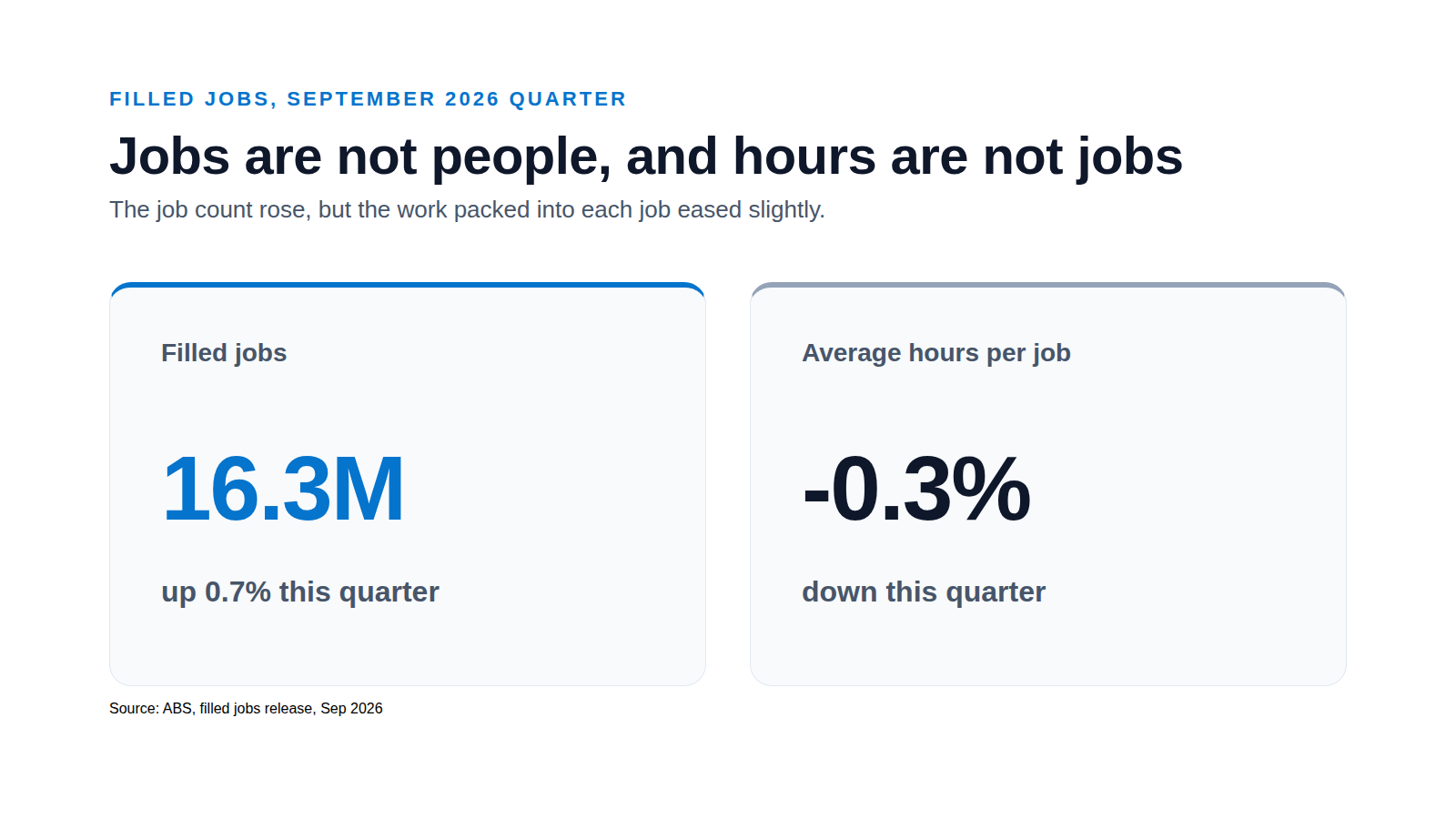
The June quarter figures look simple at first glance. Filled jobs rose 0.7% to 16.3 million, the fifth quarterly rise in a row. It is tempting to read that as more people at work and more hands available to hire. Look closer and the picture changes. Secondary jobs rose far faster than main jobs, and average hours per job fell. If you plan a workforce, hire staff, or brief a board on labour supply, that gap matters, because a job is not a person.
The headline says jobs are up
The Australian Bureau of Statistics reported that filled jobs rose by 110,700 to 16.3 million in the June quarter, a rise of 0.7%. That is the fifth quarterly increase in a row, so the direction is steady. Read on its own, the number suggests firm demand and a growing pool of workers. Most workforce dashboards would show a green arrow next to it and move on to the next tile. The trouble is that the headline counts jobs, not people. Those two things usually move together. This quarter they did not, and the reason is worth understanding before you act on the figure.
A job is not a person
The Labour Account counts jobs, not the individuals who hold them. One person can hold more than one job. A nurse who picks up weekend shifts at a second employer adds a second job to the count while remaining one person in the workforce. A warehouse worker who drives for a delivery app on weeknights does the same. When more people take on a second job, the job count climbs faster than the head count. So a rise in filled jobs can mean more people working, the same people working more, or a mix of the two. The headline number alone will not tell you which, and the difference matters for planning.
Secondary jobs are the fast-moving number
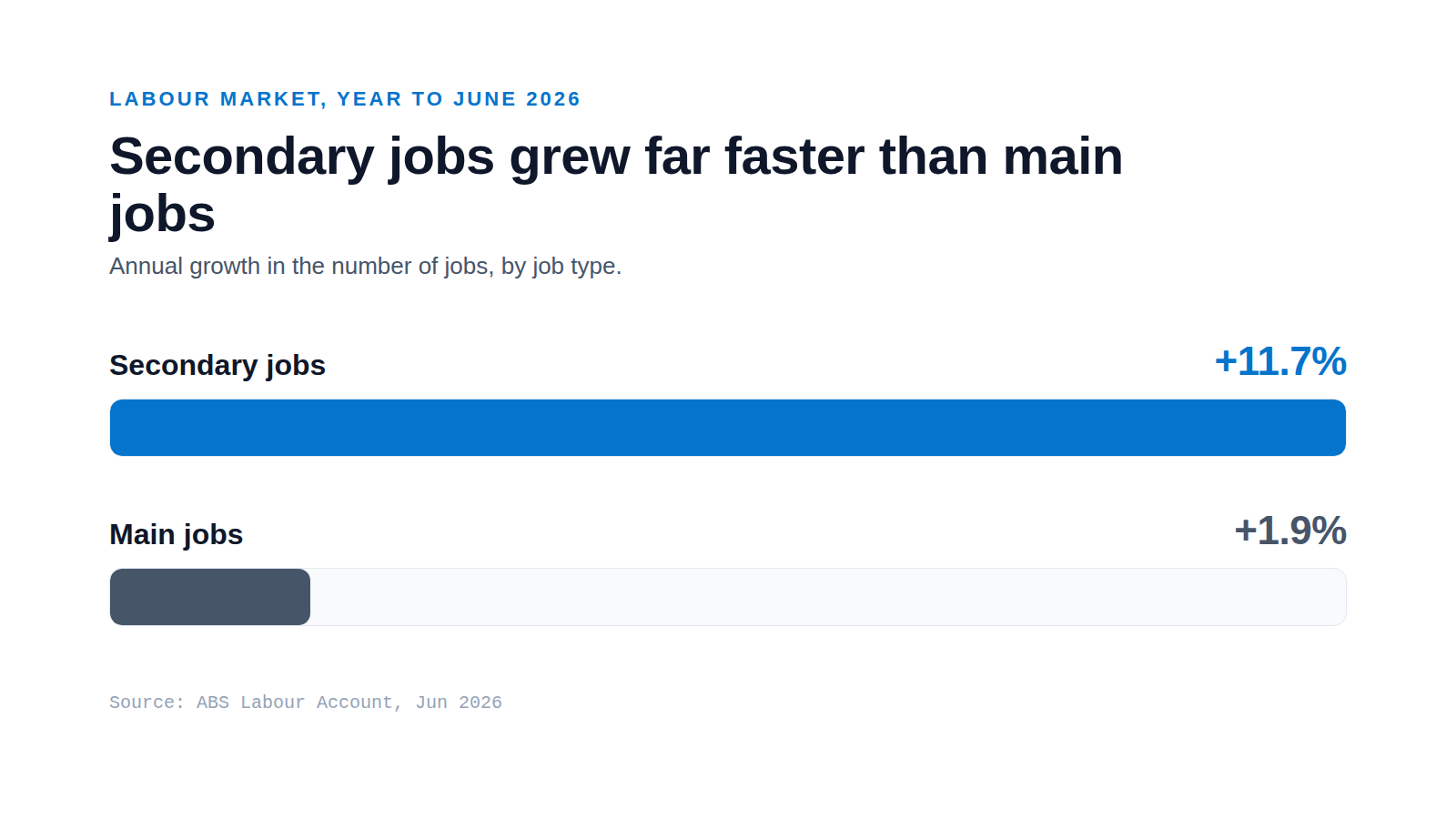
Here is where the June quarter gets interesting. Secondary jobs rose 4.6% in the quarter, while main jobs rose 0.4%. Through the year the gap is wider still. Secondary jobs grew 11.7%, an extra 122,000 jobs, while main jobs grew 1.9%, an extra 288,400 jobs. At the same time, average hours worked per job fell 0.3%. So the fastest-growing part of the count is the part where people add work on the side, not the part where new roles are created and filled. Main jobs still added the larger absolute number, but the rate of change tells the real story. When the side job grows six times faster than the main job, the labour market is behaving differently than the headline implies.