If your team tracks Australian labour demand, the labour force modernisation project at the ABS matters to you this month. It concludes at the end of September 2026, and the first fully modernised figures land on 24 September. The seasonal adjustment factors the ABS used to apply in February and August are gone. In plain terms, your next monthly move could be partly method, not market, and nothing on your dashboard will say so. If you brief managers on where the labour market is turning, that gap is your problem to close. This post walks through what changed, which series it touches, and the checks to run before the print.
What the labour force modernisation changed at the ABS
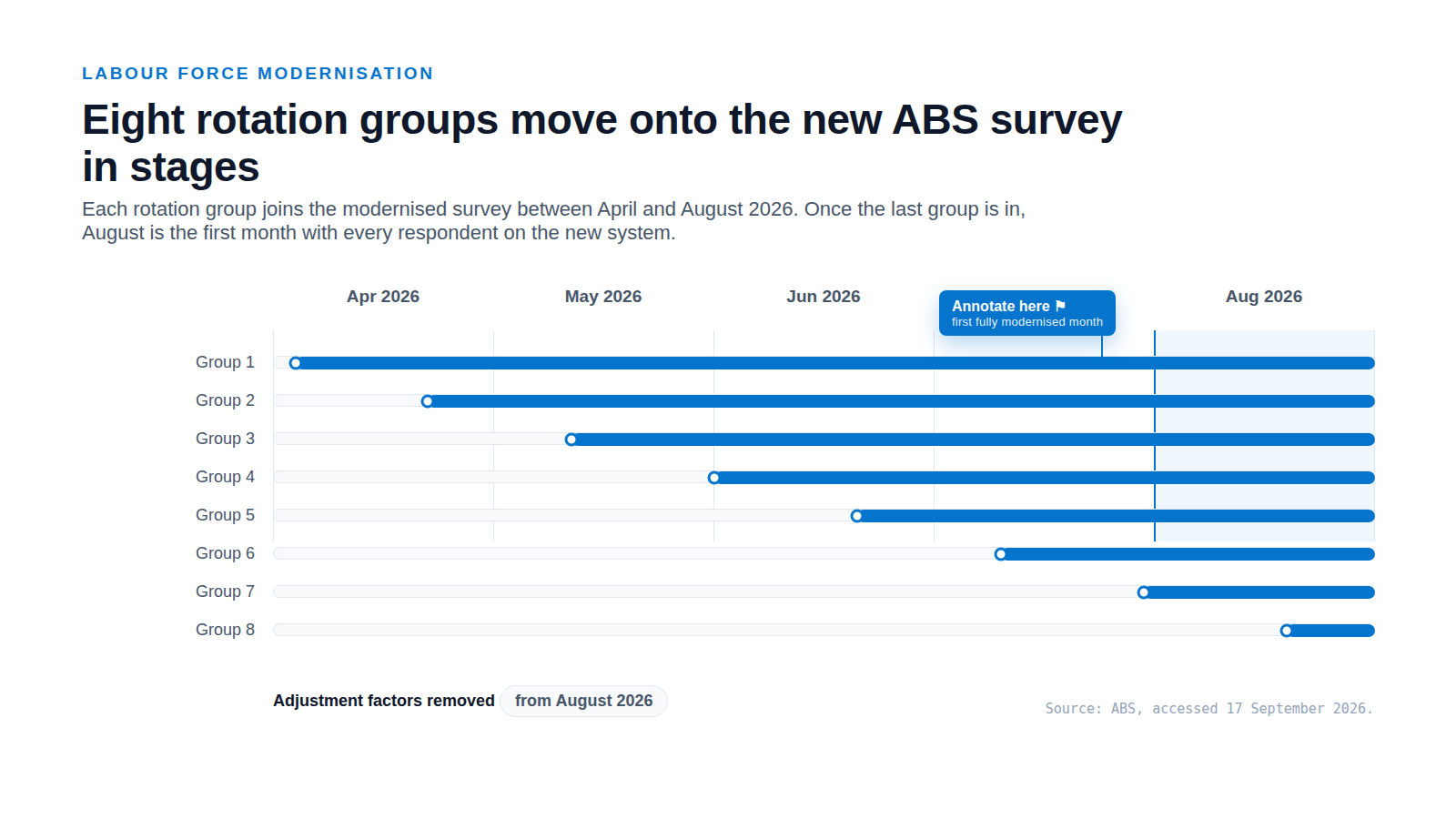
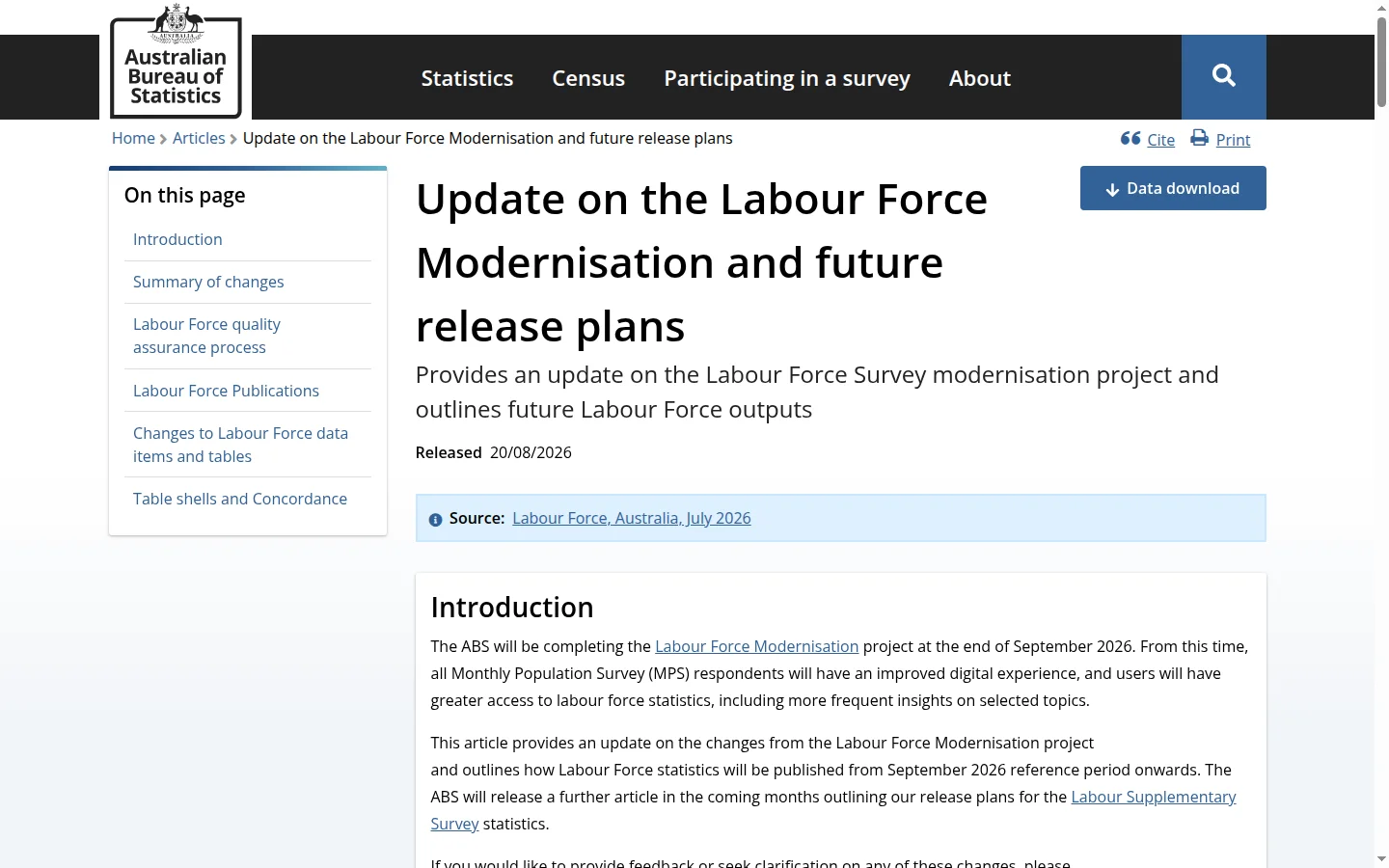
The ABS has been modernising how it runs the Labour Force Survey. The changes were phased in from April to August 2026. By August 2026, all eight rotation groups were on the new survey system and collection model, and August was the first month the ABS collected the new Labour Supplementary Survey. The project concludes at the end of September 2026. None of this changes what the survey measures. It changes how the numbers are produced, which is exactly the kind of shift that can move a series without the market moving.
A modernised survey is a good thing over the long run. Cleaner collection and a better system mean more reliable numbers. The catch is the join. For a few months your history and your new figures sit on slightly different footings, and that join is where a dashboard can quietly mislead.
Why a method change can look like a market move
Starting with August 2026 data, the ABS removed the seasonal adjustment factors it previously applied in February and August. The ABS says the removal is expected to have a small impact on the variability of estimates for August and February. Small is not zero. When you compare August with July, part of the change can now come from the method, not the labour market. Read the whole move as the market turning and you can brief a manager on a shift that is partly a survey change. That is a hard thing to walk back once someone has acted on it.
Removing these factors is expected to have a small impact on the variability of estimates for August and February.