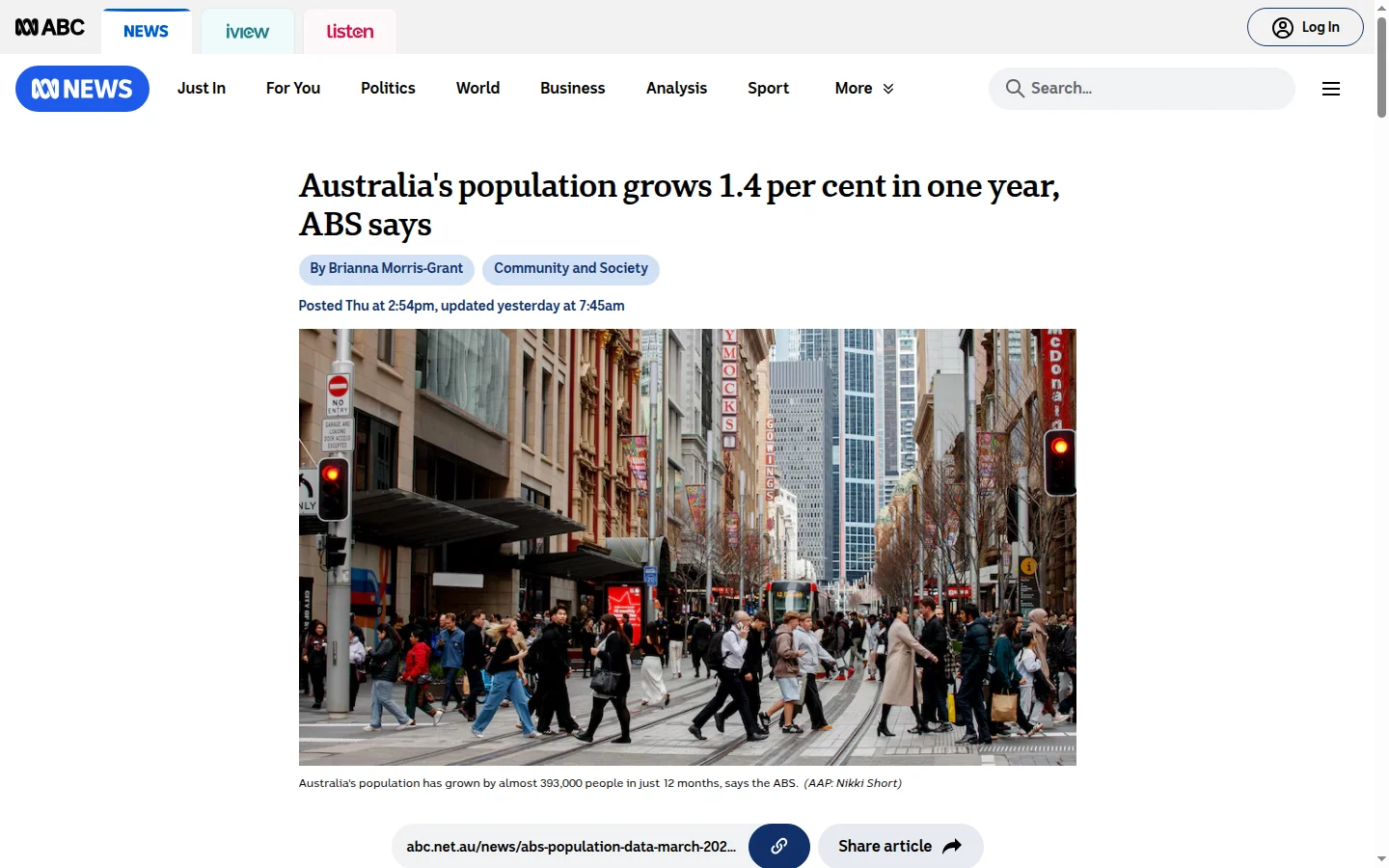
Australia population growth 2026 has cooled. The latest release from the Australian Bureau of Statistics puts the population at 27.9 million at 31 March 2026, with annual growth of 392,700 people, or 1.4%, over the year. If your demand model still carries a 2% assumption from a year or two ago, it is now counting people who did not arrive. This post walks through what the March 2026 numbers change for a property or council forecast, and what to rebase before your next planning cycle.
What the March 2026 numbers actually say
The headline is a total population of 27.9 million at 31 March 2026. Growth over the 12 months was 392,700 people, an annual rate of 1.4%. That rate matters more than the total. Many forecasts built in 2024 or 2025 assumed growth nearer 2%. The gap between 2% and 1.4% is not rounding. Applied to a base of nearly 28 million people, it is a difference of well over 150,000 people a year that your model may be expecting and not seeing.
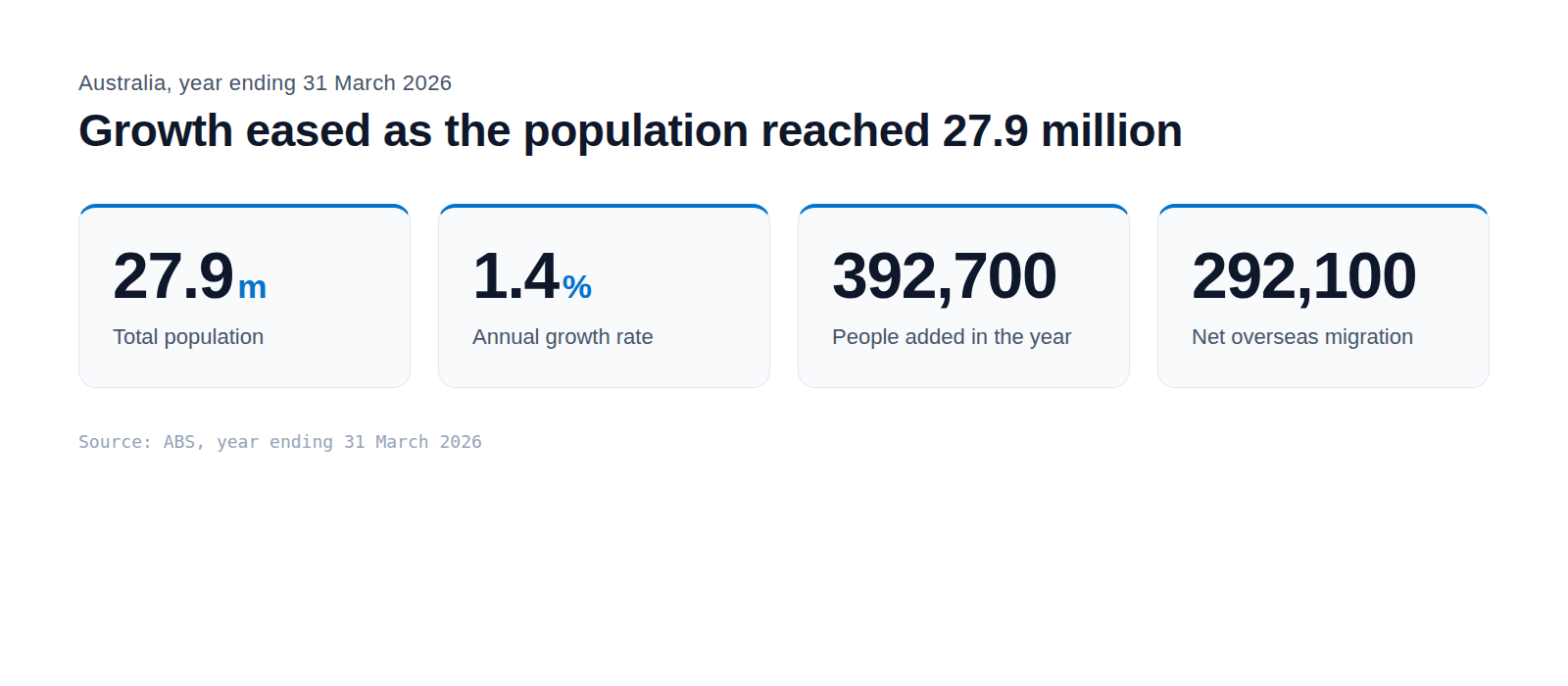
- 27.9 million
- Total population at 31 March 2026
- 392,700 people (1.4%)
- Annual growth to March 2026
- 292,100 people
- Net overseas migration
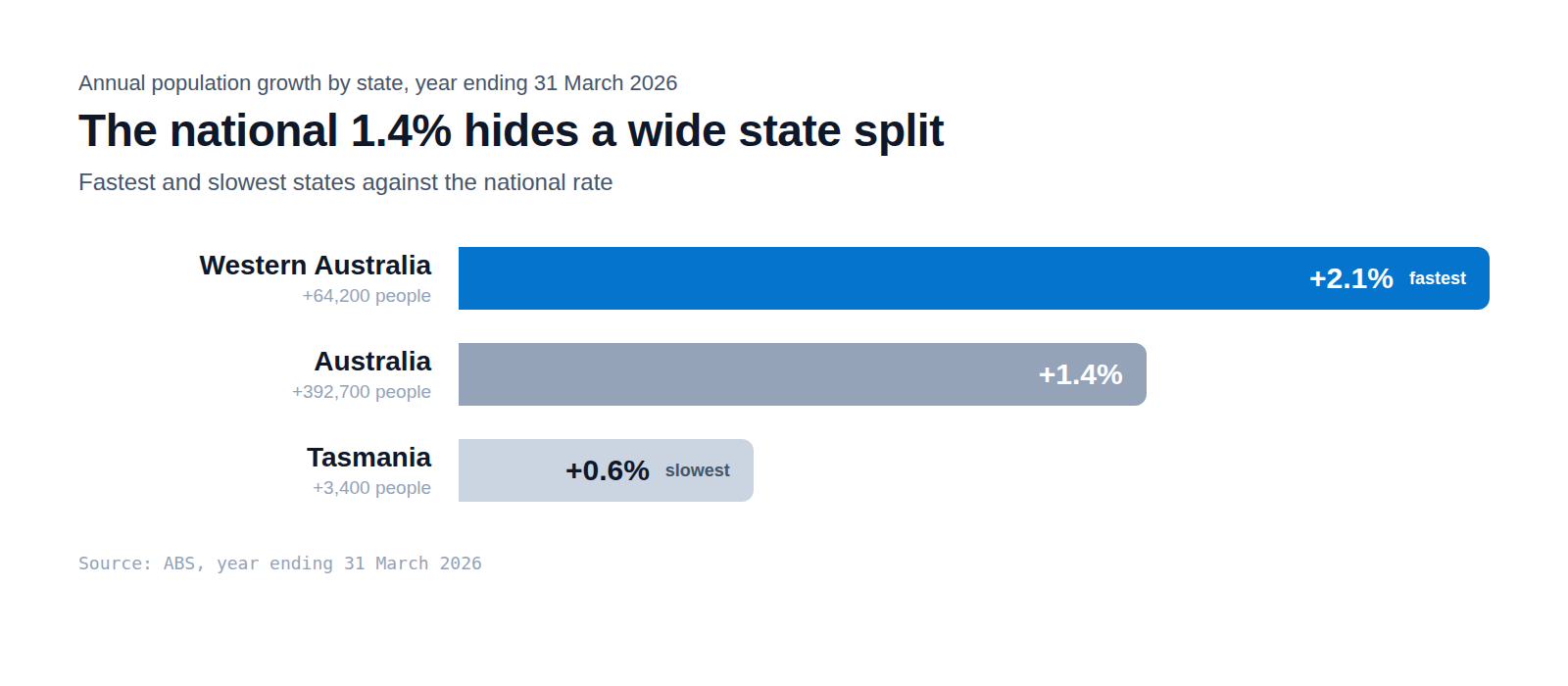
- WA +2.1% vs Tasmania +0.6%
- Fastest vs slowest state
Most of the growth is still migration, but migration is easing
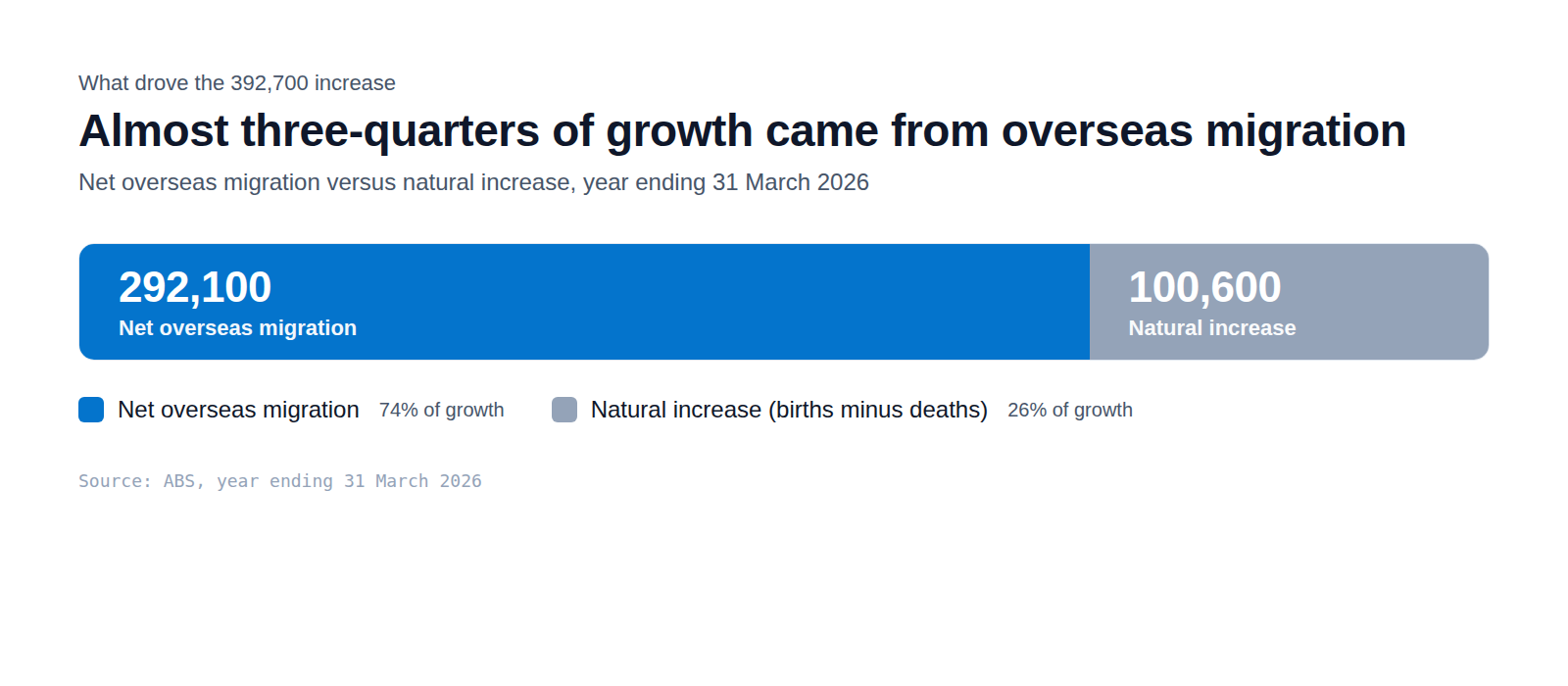
Growth still comes mostly from overseas migration, but the flow is easing. Net overseas migration added 292,100 people over the year. Natural increase, which is births minus deaths, added 100,600. Immigration was 557,500 people, down 4% on the previous year, while emigration was 265,400, down 2.2%. Births rose 0.3% and deaths rose 3.1%, so natural increase is doing less of the work than it once did.
almost 75 per cent of the increase came from overseas migration
For a demand model, that concentration is the risk. Migration is policy sensitive and can move quickly from one year to the next. A forecast that leans on migration should track the migration line on its own, not fold it into a single growth number where a change is hard to see.