If your team collects information about people, a change in the draft law should be on your radar. The fair and reasonable test is a new rule proposed in the Exposure Draft Privacy Amendment (Personal Data Protection) Bill 2026. It asks one question of every collection: is this fair and reasonable in the circumstances? Consent on its own will no longer settle the matter. This post explains what the test checks, what else the bill changes, and how to get your intake ready before the rules are set.
What the fair and reasonable test actually is
The test sits inside a revised Australian Privacy Principle 3. Under the draft, collection, use and disclosure of personal data must be fair and reasonable in the circumstances. That is an objective standard. It does not ask whether you got a tick in a box. It asks whether a reasonable person would see the handling as fair, given what you collected, why, and from whom. The Conversation describes it as a world-first approach to data collection. In plain terms, the law is moving from did you ask to should you have.
Why consent alone no longer protects you
Many teams treat consent as the safety net. Get the form signed, and the collection is defensible. The draft changes that. Allens notes that an organisation with textbook consent can still breach the law if its handling is not objectively fair and reasonable. Consent stays relevant, but it is no longer the whole answer. If you collect more than you need, hide the real purpose, or give people no genuine choice, a signed form will not save you. The weight shifts to the design of your collection, not the paperwork around it.
The factors regulators will weigh
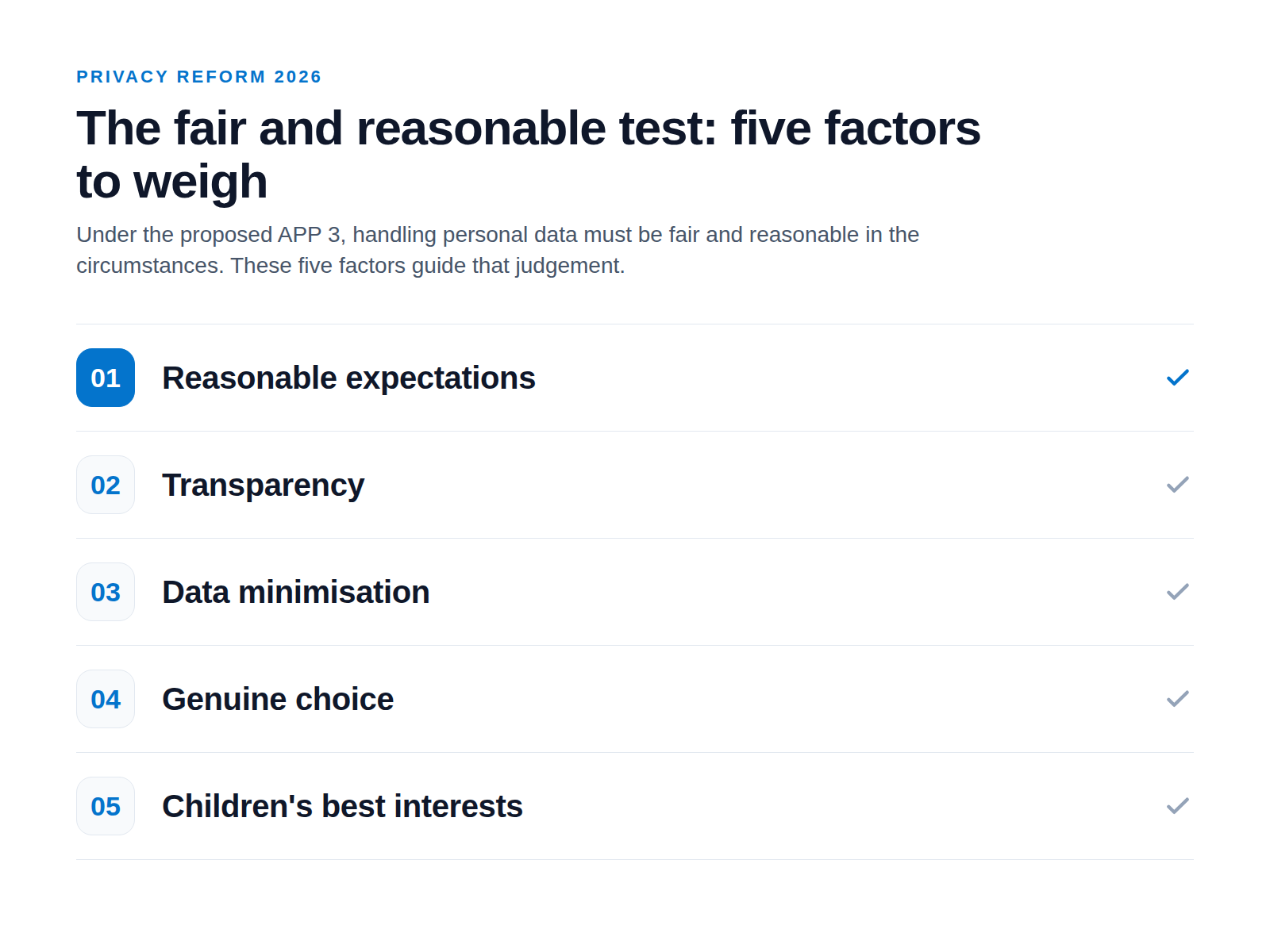
The draft sets out factors that shape whether a collection passes. Allens lists these as the anchors of the assessment:
- Reasonable expectations: would a reasonable person expect you to collect this data in this situation.
- Transparency: whether you are open about what you collect and why.
- Data minimisation: whether you collect only what the purpose needs.
- Genuine choice: whether people have a real option, not a forced tick.
- Children's best interests: where children are involved, their interests carry extra weight.